Knowledge has been represented in a multitude of ways spanning the readings we have covered in the last couple weeks of fall quarter. From personal anecdotes by Zitkala-Sa to the impact language has in Waiting for the Barbarians, knowledge is a clear indicator of formulating identity within a group or individual.
Language has been and continues to act as a core element to bridging gaps in humanity.

Over the past couple of weeks, our readings and discussions of Waiting for the Barbarians and The Revenant have highlighted the significance and power that language holds. The two representations of language help compliment one another, showcasing the number of different interpretations one can have about language. Language is a two-way street—with the capabilities to bridge gaps, but also create barriers.
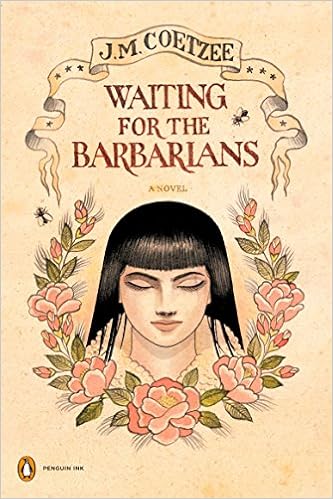
Starting with Waiting for the Barbarians, the work emphasizes the distinct barrier that has been formulated through language, distancing the empire from the barbarians. The barbarians are depicted as savages, given animalistic qualities that stress the primitive nature of the people. Rather than represented as people, the language and characteristics given to the people are directed to dehumanized them, painting them as animals rather than humans. Thus, the distribution of knowledge and levels of power are used to brand the identity of individuals, from those in the empire as right minded and superior versus the barbarians as savage and animalistic.
On the other hand, The Revenant takes on a different perspective to the use of language and its connection to knowledge. Throughout the film, it is evident that languages are intertwined with one another, making it hard to differentiate which languages are being spoken at a certain time, ranging from French to Pawnee. The flow of language that it found in the film suggests a level of equality rather than a power struggle between those who are different from one another. The film puts into play the idea that there is no dominant language that acts as an overarching force to control the others. Thus, identity is characterized differently in this instance as compared to Waiting for the Barbarians. It pushes the idea that language acts as a bridge rather than a barrier to identity and individuals.

In addition, the Zitkala-Sa readings, “The Impressions of an Indian Childhood”, we have covered this quarter give a more personalized account of the effects of knowledge in the Native American experience. Written from a native American child’s point of view, the work builds off the naivety of a child and the level of curiosity that comes along with it. The author’s approach to the work is a way in which knowledge is being shared, for she has the ability to choose what she wishes to highlight and what she wishes to mask. Through the work, she tells of a child’s experience whose identity is being impacted due to the discrimination that her people faced.

Ultimately, the concept of knowledge has pushed forth a multitude of different connections to the different works that we have focused on this quarter. It is a keystone to addressing identity, which is shown in works we have explored this quarter.

 Exploring Empire